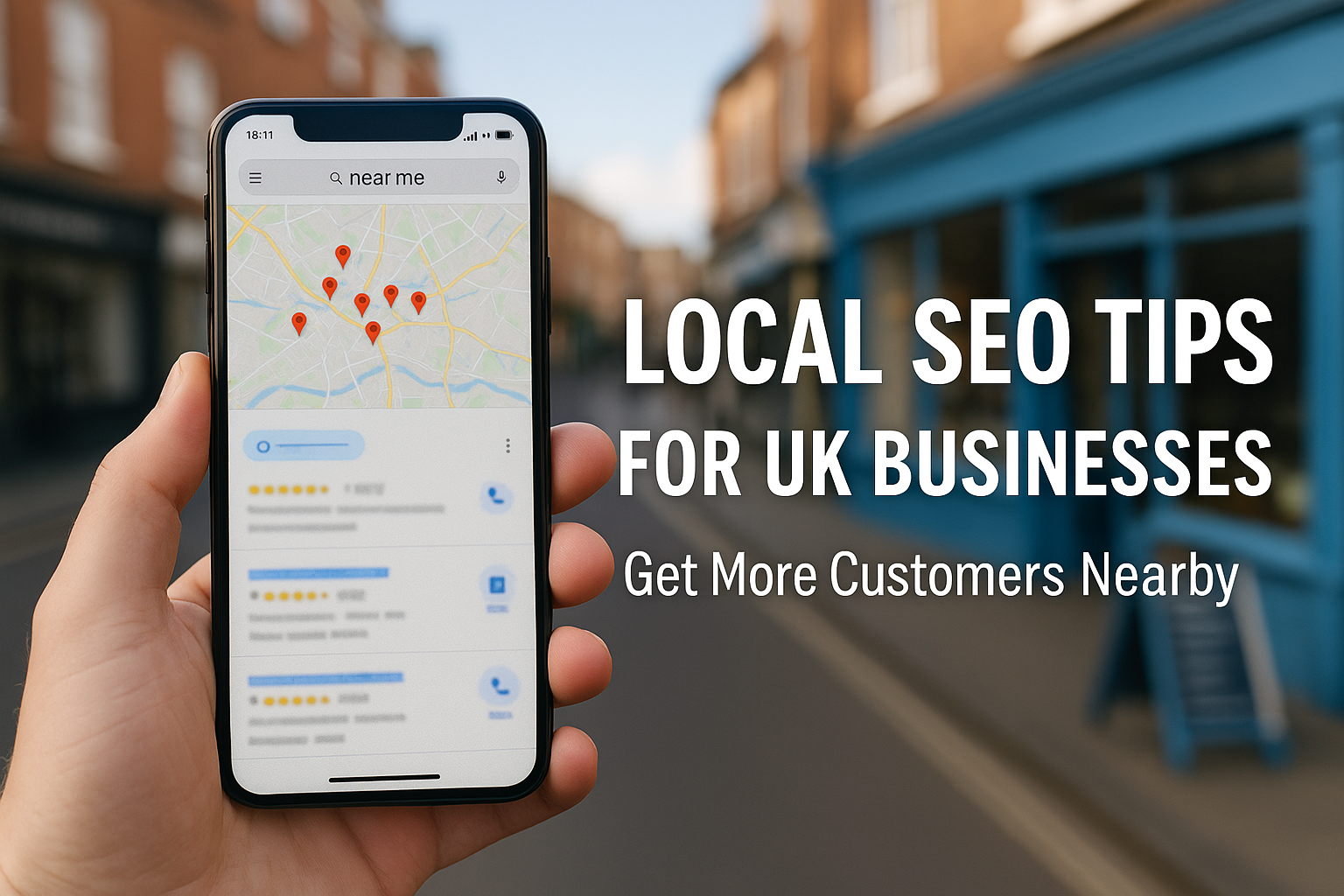
If you run a local business in the UK, your website isn’t just a digital business card — it’s a magnet for nearby customers. The trick is making sure Google actually shows your site when someone searches “near me.”
That’s where Local SEO (Search Engine Optimisation) comes in. And the good news is, you don’t need a huge budget or a marketing agency to get started. A few smart moves can make all the difference.
Why Local SEO Matters
Think about your own habits. When you’re looking for a café, plumber, or hairdresser, you don’t search the whole internet — you type “near me” or the name of your town.
Google then pulls up a shortlist of nearby businesses. If your business isn’t there, you’re invisible. Simple as that.
1. Claim and Optimise Your Google Business Profile
This is step one for every local business.
- Head to Google Business Profile and claim your listing.
- Make sure your name, address, and phone number (NAP) are 100% correct.
- Add opening hours, services, photos, and even posts with offers or updates.
A well-filled profile is more likely to appear in the map pack (the top 3 businesses Google shows on maps).
2. Consistency is Key
Your business details should be the same everywhere:
- Your website
- Google Business Profile
- Social media
- Online directories
If Google sees different phone numbers or addresses, it loses confidence and might rank you lower.
3. Collect Genuine Reviews
Reviews are one of the strongest local ranking factors.
- Ask happy customers to leave a Google review.
- Make it personal: staff asking for reviews by name massively boosts conversion.
- Respond to every review (good and bad) — it shows you care.
The more genuine reviews you get, the more trust you build — with both Google and your customers.
4. Optimise Your Website for Local Keywords
Don’t just target broad terms like “plumber.” Instead, use:
- “Plumber in Glasgow”
- “Emergency plumber in South London”
- “Best plumber near Manchester city centre”
Include these naturally in your page titles, headings, and content. Don’t stuff keywords — write for humans first.
5. Add Location Pages (If Relevant)
If you serve multiple towns or regions, create a dedicated page for each.
For example:
/plumber-glasgow/plumber-edinburgh
Each page should have unique content tailored to that location, not just copy-paste.
6. Get Local Backlinks
Links from other websites help your rankings, and local links are especially powerful.
- Partner with nearby businesses and swap links.
- Get listed in local directories.
- Sponsor a local event or charity (these often come with a backlink).
7. Use Schema Markup (Optional, But Helpful)
This is a bit more technical, but adding Local Business schema to your website helps Google understand your details better. Many WordPress SEO plugins (like Yoast or Rank Math) make this easy.
Final Thoughts
Local SEO isn’t about tricking Google. It’s about making your business easy to find, trust, and choose. With a well-optimised profile, consistent details, and a steady flow of reviews, you’ll be miles ahead of most competitors.
If you’re a small business owner in the UK, these steps can bring in more foot traffic, more calls, and more loyal customers — all without spending a fortune on ads.
Leave a Reply