Category: Uncategorized

  • How to Run a Staff Meeting That Isn’t a Waste of Time

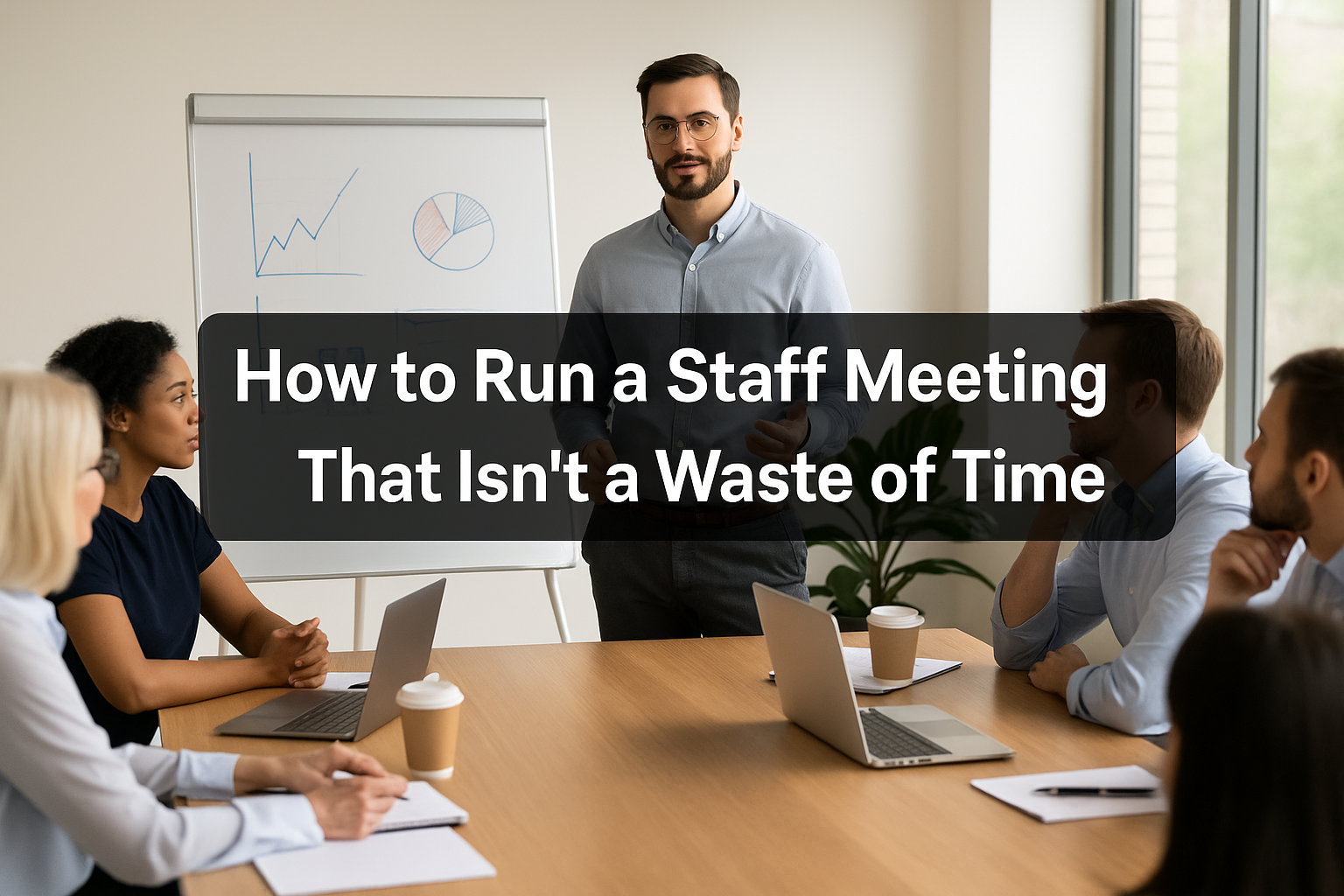
    How to Run a Staff Meeting That Isn’t a Waste of Time

    We’ve all been in those meetings — the ones that drag on, go in circles, and leave everyone wondering why they bothered showing up. For many businesses, staff meetings are more of a time drain than a productivity boost.

    But when done right, meetings can actually motivate your team, keep everyone aligned, and drive real results. The difference comes down to structure and purpose.


    Start With a Clear Goal

    Before you even schedule a meeting, ask yourself: What’s the purpose?

    • Is it to update the team?
    • Solve a problem?
    • Gather ideas?

    If you can’t define the goal, you don’t need a meeting — send an email instead.


    Keep It Short and Focused

    Time is valuable. A good rule of thumb: if you can’t cover it in 30 minutes, your agenda is too big.

    • Stick to 2–3 key topics.
    • Park side discussions for follow-up.
    • Start and finish on time — always.

    This shows respect for your team and keeps energy levels high.


    Give Everyone a Voice

    A meeting shouldn’t just be management talking at staff. Encourage input:

    • Go around the table (or screen) for updates.
    • Ask open questions.
    • Give quieter team members space to share.

    People engage more when they feel heard.


    End With Action Points

    Too many meetings end with “Alright, that’s it then.” The result? No one knows who’s doing what.

    Always wrap up with:

    • Clear actions.
    • Who’s responsible.
    • Deadlines.

    That way, the meeting actually leads to progress.


    Don’t Be Afraid to Skip Meetings

    Sometimes the best meeting is no meeting. If the update could be shared in an email, or a quick one-on-one would do, save everyone the time.


    Final Thoughts

    Staff meetings don’t have to be dreaded calendar fillers. With a clear purpose, short agenda, and actionable outcomes, they can become a powerful tool for communication and motivation.

    Respect your team’s time, and they’ll respect the meeting.
    Subscribe To Our Newsletter

    Loading
  • Best Website Platforms for UK Small Businesses (WordPress vs Squarespace vs Wix)

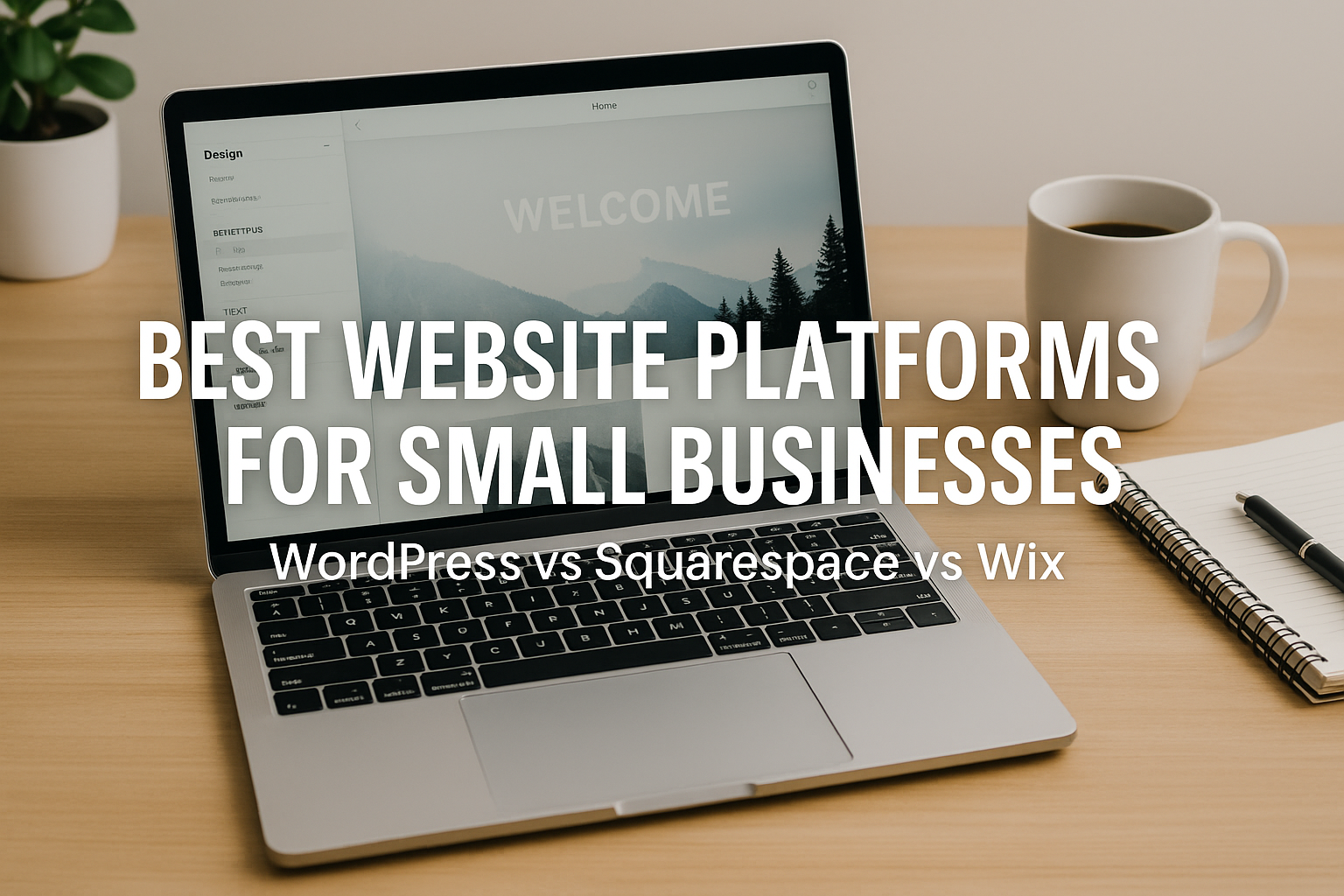
    Best Website Platforms for UK Small Businesses (WordPress vs Squarespace vs Wix)

    One of the first questions every new business asks me is: “What’s the best platform to build my website on?”

    The truth is, there’s no one-size-fits-all answer. It depends on your goals, your budget, and how much control you want over your site. But after working with dozens of small businesses (and running my own), I’ve seen the pros and cons of the three biggest players: WordPress, Squarespace, and Wix.

    Here’s my take on each — and which one might be right for your business.


    WordPress: The Flexible Powerhouse

    WordPress is by far the most popular website platform in the world. Nearly half of all websites run on it — and for good reason.

    Pros:

    • Extremely flexible — you can build anything from a simple blog to a full e-commerce shop.
    • Thousands of plugins and themes to add extra features.
    • Affordable hosting (I personally recommend Ionos, who I’ve trusted for decades).
    • Great for SEO with tools like Yoast SEO.

    Cons:

    • Slightly steeper learning curve.
    • Needs a bit of setup (domain + hosting).
    • You’re responsible for updates and security (though most hosts make this easy).

    👉 Best for: Businesses that want flexibility, scalability, and the lowest long-term costs.


    Squarespace: The Designer’s Choice

    Squarespace is the opposite of WordPress — everything is hosted for you, with sleek templates and drag-and-drop design.

    Pros:

    • Beautiful, ready-made templates.
    • Hosting, security, and support all included.
    • Easy to set up — no tech skills needed.
    • Perfect for creative businesses like photographers, designers, or consultants.

    Cons:

    • Less flexible than WordPress (you’re limited to what Squarespace offers).
    • More expensive monthly cost.
    • Not as strong for SEO as WordPress, though it’s improving.

    👉 Best for: Businesses that want something simple, stylish, and fast to launch.


    Wix: The Beginner-Friendly Option

    Wix is another “all-in-one” website builder, often compared to Squarespace but with more drag-and-drop freedom.

    Pros:

    • Very beginner-friendly with lots of templates.
    • Hosting included.
    • App market for adding features.
    • Free plan available (with Wix branding).

    Cons:

    • Can feel “locked in” — once you choose a template, you can’t switch.
    • SEO tools are weaker compared to WordPress.
    • Sites can feel slower or less professional if not designed carefully.

    👉 Best for: Startups on a budget who just want to get something live quickly.


    So, Which One Should You Choose?

    If you’re serious about building a long-term online presence, WordPress is my top recommendation. It gives you the most control, scales with your business, and has the best tools for SEO and growth.

    But if you’d rather avoid the technical side and just want something that “works out of the box,” Squarespace or Wix might be a better fit — just be aware of the trade-offs.

    At the end of the day, the “best” platform is the one you’ll actually use and keep updated. A simple, well-maintained website will always beat a complex one that sits half-finished.


    Final Thoughts

    Your website is often the first impression a customer gets of your business. Whether you choose WordPress, Squarespace, or Wix, the key is to make it clear, professional, and customer-focused.

    Don’t overthink it — pick a platform, get online, and start building your presence. You can always refine and upgrade as you grow.

    Subscribe To Our Newsletter

    Loading
  • How Shell Showed Me What Not to Do in Customer Care

    How Shell Showed Me What Not to Do in Customer Care

    Well, this is my first article, so bear with me while I find me feet. My intention with these articles is to give you some of my real-life experiences, and how that translates into my mindframe. Hopefully, if you are reading this, it might make you think about something similar in your business and give you that eureka moment.

    For the past couple of years, I have been working full-time from home, so I gave up my car and just car share with my wife, if I need to go anywhere that isn’t easily accessible by train. My wife got in from work and told me that she forgot to put petrol in the car, so I thought that I would jump out to get petrol while she was getting herself ready.

    Now the point of me saying that last part is to paint you a picture that I don’t regularly go to put petrol in the car anymore, so what I saw this evening might now be common practice, but it if Shell was a customer-focused business (which we know it is not), it certainly shouldn’t be.

    Granted, the time I arrived at the garage was around 8:15 pm, but I pulled up as I usually do (pump to the far left, I’m particular for some reason). It always annoyed me that they removed the self-service on all of the pumps, especially when my vision is always to put the customer first, rather than inconveniencing them in order to get more sales from the shop.

    Anyway, I got myself sorted, lifted the pump and waited for the authorisation from the staff member, but it didn’t come. Being my polite self, I waited around for another few minutes, assuming that the staff member was perhaps busy with another customer, but the garage was really busy, and the other customers were not quite as patient as myself. Customers were banging on the windows and the door, tooting their horns and getting restless, but there was no staff member at the till like there usually was.

    This is when I spotted it… a hand-written sign that said ‘I’m on Break’…

    A few moments later, the young staff member came out from the back room, up to the glass and pointed at the sign that she was on break, then essentially started arguing with the customers about how she was entitled to a break.

    The customers were livid, calling the poor staff member all of the names under the sun, and huffing and puffing like it was the end of the world. I, on the other hand, didn’t blame this poor girl at all. This situation was a calculated move by her superiors to save money.

    Now, in my business, we have two main themes that we always stand by. We should be Customer-centric and have a great staff culture. What I saw at this garage was the complete opposite of what I stand for.

    Not only has Shell decided to remove the self-service pumps at the customer’s inconvenience, but they have also doubled down and sacrificed their workers, all to make sure that they save as much money as possible by having a single staff member on.

    The above might sound like I am having a bit of a rant and a rave here, but that isn’t my intention. It was an inconvenience, but I simply drove to the next petrol station that was less than 4 minutes away. To be honest, I’ll probably not return to that Shell and just use the Morrison’s petrol station in future because they are always manned.

    The moral of this story is that if you want to retain your customer and keep your team members happy (A happy worker is a productive worker), then you cannot sacrifice the customer experience, or your competitor will reap the benefits of your shortsightedness.

    Subscribe To Our Newsletter

    Loading